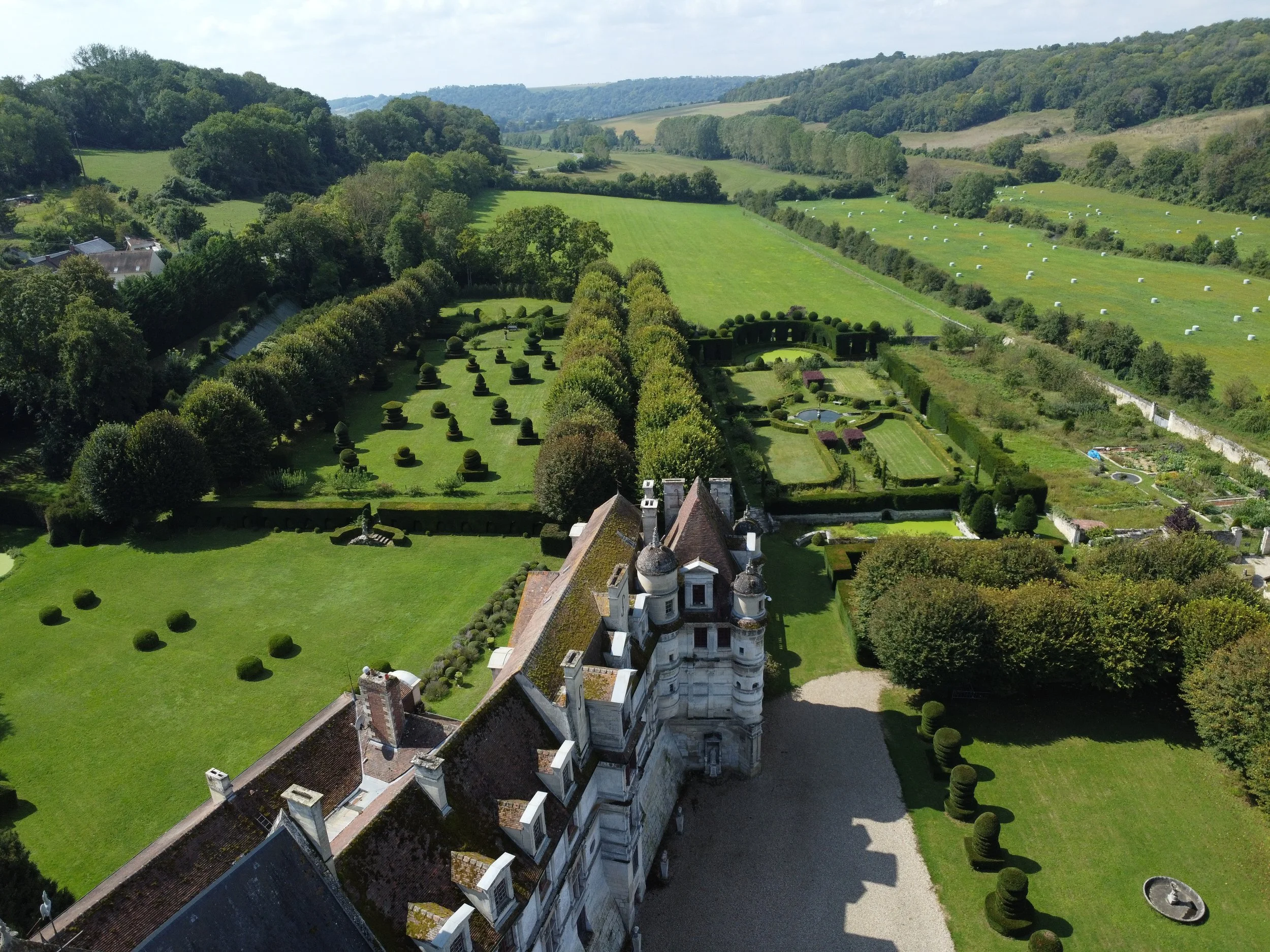
Estate, Country Living, Europe, For Sale Patrycja . Estate, Country Living, Europe, For Sale Patrycja .

A 19th-Century Scottish Castle on 160 Acres, One Hour from Edinburgh

Gillespie Graham — a defining figure of Scotland’s early Gothic Revival period — designed only two baronial houses, making this estate an unusually pure example of the style. Recent restorations, newly created terraced gardens, and a miniature railway add a distinctive layer of character to the Scottish Borders property.

Ayton Castle, a 17-bedroom baronial estate in the Scottish Borders, has come to market for £3.25 million through Knight Frank. Situated near Berwick-upon-Tweed and roughly an hour from Edinburgh, the castle is widely regarded as one of Scotland’s finest examples of 19th-century baronial architecture and is one of only two structures of this style designed by early Gothic Revival architect James Gillespie Graham.

Built around a medieval tower house and arranged primarily over two storeys with a five-storey Great Tower, the castle is constructed in squared and snecked red sandstone with ashlar dressings, rope-moulded corbelling, crenellated parapets, and crow-stepped gables. The interiors include schemes by Bonnar & Carfrae, Scotland’s leading decorators of the period, whose work left a notable impression on Mark Twain during an 1873 visit. The author purchased the dining-room fireplace mantel, now held at the Mark Twain House & Museum in Hartford, Connecticut.

The castle’s three principal state rooms retain 17th-century Scottish-style plasterwork. A gallery corridor links these formal rooms to the private chapel, which includes a kitchenette and dining space. The main kitchen, with a butler’s pantry, sits adjacent to the dining room and near the rear service entrance. A broad turnpike staircase rises from the gallery to the first floor, which contains twelve bedrooms and six bathrooms overlooking the gardens and parkland. The second floor provides four additional bedrooms and two bathrooms. Further historic service rooms and domestic quarters sit at basement and courtyard level.

Ayton Castle stands within 160.56 acres of listed gardens, woodland, and designed parkland, including the Upper and Lower Pinetums. Since 2014, the current owners have undertaken partial rewiring and re-plumbing, redecoration of principal rooms, the creation of a formal southern garden, and the installation of a 10¼-inch gauge railway—approximately 600 metres long—with its own platform, ticket office, engine shed, and joiner’s workshop. A 16th-century beehive-type dovecote and a subterranean ice house are also concealed within the grounds.

Secondary accommodation forms a significant part of the estate. Multiple cottages, gate lodges, and stable flats are let on Private Residential or Short Assured Tenancies. The Category B-listed stable block includes stabling for nine horses, loose boxes, stores, a staff room, tack room, workshop, and a double garage. An all-weather manège and additional loose boxes support the livery business currently operated on-site.

Set within expansive wooded policies and landscaped terraces, Ayton Castle remains one of the Scottish Borders’ most architecturally significant baronial estates, combining 19th-century craftsmanship, documented provenance, and extensive landholdings within close proximity to the Scottish capital.

All photos belong to the listing agency.

Read More

This 900-Year-Old Norman Castle in Northern England Heads to Auction

A rare chance to own one of Britain’s few inhabited Norman castles, listed at £5.5 million with Knight Frank, is heading to the auction block on October 30, 2025 — unless sold prior.

Previously offered through UK Sotheby’s International Realty for £9.5 million, the 900-year-old Appleby Castle in Cumbria now presents a singular opportunity to acquire one of England’s most complete and continuously occupied Norman keeps.

Set within 25 acres of parkland, the Grade I-listed estate encompasses a Norman Keep, Round Tower, and three self-contained cottages, together offering 23 bedrooms, 19 bathrooms, two Great Halls, a gym, sauna, hot tub, and billiard room. The castle’s richly detailed interiors reveal centuries of craftsmanship, from 15th-century oak panelling to carved stone fireplaces and decorative plasterwork.

Once held by English monarchs — including Henry II, Richard the Lionheart, and Richard III — Appleby Castle stands as a living record of England’s medieval past.

Built around 1100 AD, Appleby Castle is one of only about 20 inhabited Norman castles remaining in Britain — most of which are held by the Royal Family or heritage trusts. It has been continuously occupied for more than nine centuries and is considered one of the few surviving intact Norman keeps in the UK.

The estate’s enduring presence owes much to Lady Anne Clifford (1590–1676), the formidable 17th-century noblewoman who defied King James I and Parliament in a decades-long battle to reclaim her ancestral lands. Following the destruction of Appleby Castle during the English Civil War, she personally oversaw its restoration, rebuilding the Great Hall and adding the central wall of the Norman Keep that still defines the structure today. Her vow — “for every stone pulled down, I will lay a new one” — became a symbol of resilience and legacy, ensuring the castle’s survival into the modern era.

Over the past two decades, the current owner has continued that stewardship, undertaking extensive maintenance including the replacement of the lead roofs on both the Castle and the Keep. Since 2016, Appleby Castle has also operated partly as a hotel and events venue, hosting weddings, film shoots, educational tours, and open-air theatre — demonstrating its rare adaptability for both private and commercial use.

Auctioneer Peter Mayo of Knight Frank notes that “to new owners, the castle’s versatility is endless.” With its historic lineage of English kings — from Henry II and Richard the Lionheart to Richard III — and a legacy shaped by one of England’s earliest female estate restorers, Appleby Castle stands as a living testament to the endurance of Norman architecture and the spirit of those who rebuilt it.

All photos belong to the listing agency.

Read More
Europe, For Sale, Historic, Oceanfront, Spain, Waterfront Patrycja . Europe, For Sale, Historic, Oceanfront, Spain, Waterfront Patrycja .

A Restored 1740s Fortress in Spain Built to Defend Against Pirates

Commissioned in 1740 under the Spanish Bourbons, Castillo del Príncipe — named for the son of King Charles III — is a rare horseshoe-shaped coastal fortress restored into a nine-bedroom retreat overlooking Galicia’s rugged Costa da Morte.

Built in 1740 under the reign of the Spanish Bourbons, Castillo del Príncipe — or “Castle of the Prince” — stands on Galicia’s rugged Costa da Morte, its thick granite walls once guarding the Corcubión estuary from pirate invasions.

The fortress was named in honor of the son of King Charles III of Spain and constructed alongside Castelo do Cardeal (“Castle of the Cardinal”) across the water. Together, the twin strongholds protected the coastline from seaborne threats. Local lore tells of a massive iron chain hidden beneath the waves, connecting the two fortresses and raised to block enemy ships as they advanced — a story that has become part of Galician maritime legend.

Originally state property, the fortress was sold at public auction in the late 19th century. In 1985, Galician businessman Xosé Ramón Oreiro undertook a major restoration, transforming the historic stronghold into a private residence while maintaining its architectural integrity.

Today, the property spans over 1,900 square meters (more than 20,400 square feet) with nine bedrooms arranged around a vast central courtyard. The former garrison quarters — once home to 88 soldiers — have been reimagined with vaulted ceilings, stained glass windows, and pointed arches that flood the interiors with natural light. Original defensive features remain visible throughout, from the half-bastions of the ravelin to the outer moat and stone bridge leading to the heart of the compound.

Set on approximately 8.2 acres overlooking the Atlantic, the horseshoe-shaped fortress commands sweeping views of the sea and surrounding forests. The granite masonry, carved with remarkable precision, reflects the craftsmanship typical of 18th-century military architecture in Galicia — austere, monumental, and enduring.

Designated a Site of Cultural Interest in 1994, Castillo del Príncipe forms part of Galicia’s protected cultural heritage. Its restoration balances historical preservation with discreet modern comfort, offering an exceptional opportunity to own one of Spain’s most singular coastal properties — a residence born from the need to defend the empire’s western edge, now reimagined as a private retreat on the “Coast of Death.”

All photos belong to the listing agency.

Read More

A Scottish Castle to Restore on a Remote Island Lists for £750,000

Accepting offers over £750,000, Kinloch Castle awaits a visionary custodian. The island’s forty residents — guardians of the Isle of Rum’s nature reserve and heritage — hope for a sensitive revival that honours its ecology as much as its history.
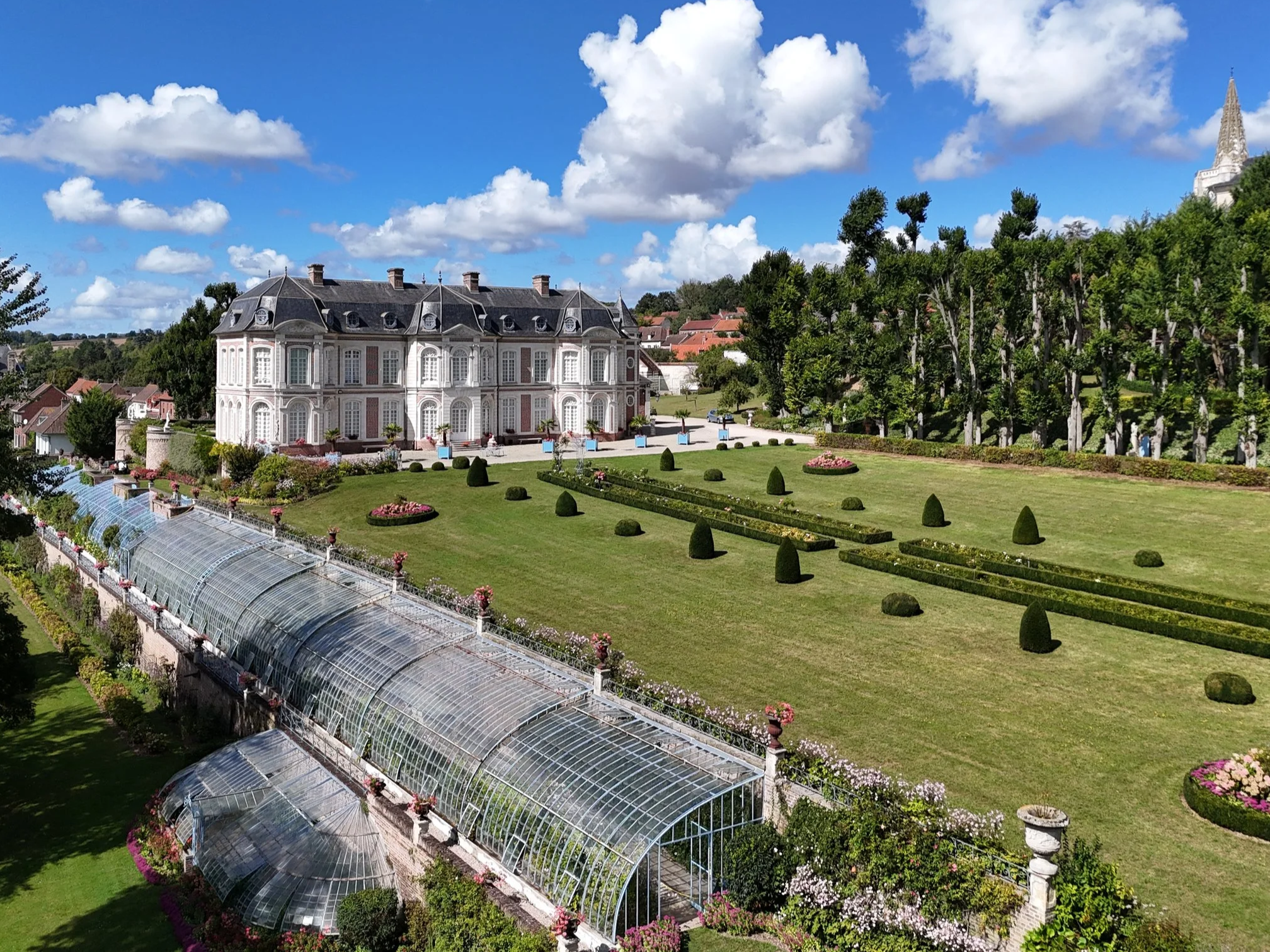
A rare chance to revive one of Scotland’s most storied island estates, Kinloch Castle on the Isle of Rum has returned to the market with Savills for offers over £750,000.

Built between 1897 and 1900 for industrialist Sir George Bullough, Kinloch Castle stands as a monument to Edwardian grandeur — a red sandstone landmark rising from the wild, cinematic landscape of Scotland’s Isle of Rum in the Inner Hebrides.

When completed, Kinloch was among Britain’s most advanced private houses, fitted with electric lighting powered by its own hydro plant, central heating, and double-glazed windows decades ahead of their time. Conceived not merely as a residence but as a stage for the Bulloughs’ world, it hosted aristocrats, politicians, and stage luminaries who crossed the sea for shooting parties and lavish dinners beneath painted ceilings.

Today, the castle remains largely untouched — silk-hung ballrooms, mahogany dining rooms, and stained-glass corridors frozen in time. Inside, Edwardian excess meets global influence: Japanese lacquer cabinets, Indian brass tables, Napoleonic engravings, and a 1900 Steinway grand piano — all included in the sale. The grand galleried hall still houses a rare Imhoff & Mukle mechanical orchestrion, one of only three known to survive.

Much of Kinloch’s refinement was shaped by Lady Monica Bullough (formerly actress Monica Townsend), whose 1903 marriage to Sir George brought theatrical elegance to this remote island retreat. Upstairs, 20 bedrooms — including Lady Monica’s suite overlooking Loch Scresort — remain intact, while original Shanks of Barrhead multi-jet showers reveal an early fascination with wellness and modern convenience.

Beyond the castle’s 18 acres of listed gardens and parkland, the Isle of Rum — now a National Nature Reserve managed by NatureScot — shelters golden eagles, red deer, and one of the world’s largest colonies of Manx shearwaters.

After the First World War, Kinloch’s gilded age faded, and the estate eventually passed to the Nature Conservancy Council in 1957. Restoration has been intermittent, and while the castle has occasionally opened to visitors, it now requires substantial refurbishment — with redevelopment costs estimated at £10 million or more, depending on vision.

The island’s close-knit community of around forty residents — who balance tourism, conservation, and heritage — have expressed hopes that any new custodian will bring a sensitive, sustainable proposal that respects Rum’s fragile ecology and unique sense of place.

Yet the potential is extraordinary. As visionary custodians reimagine Scottish estates as boutique retreats, cultural venues, and ecological sanctuaries, Kinloch Castle stands ready for revival — a rare chance to inherit scale, provenance, and cinematic grandeur on one of Scotland’s most storied islands.

All photos belong to the listing agency.

Read More

A Restored Château With Some of France’s Largest Private Greenhouses

Set above the Somme River near Abbeville (1h40 from Paris), this 18th-century pink-brick residence is positioned atop a series of terraces with century-old greenhouses—each nearly 100 metres (328 feet) long—among the largest in private ownership in France.
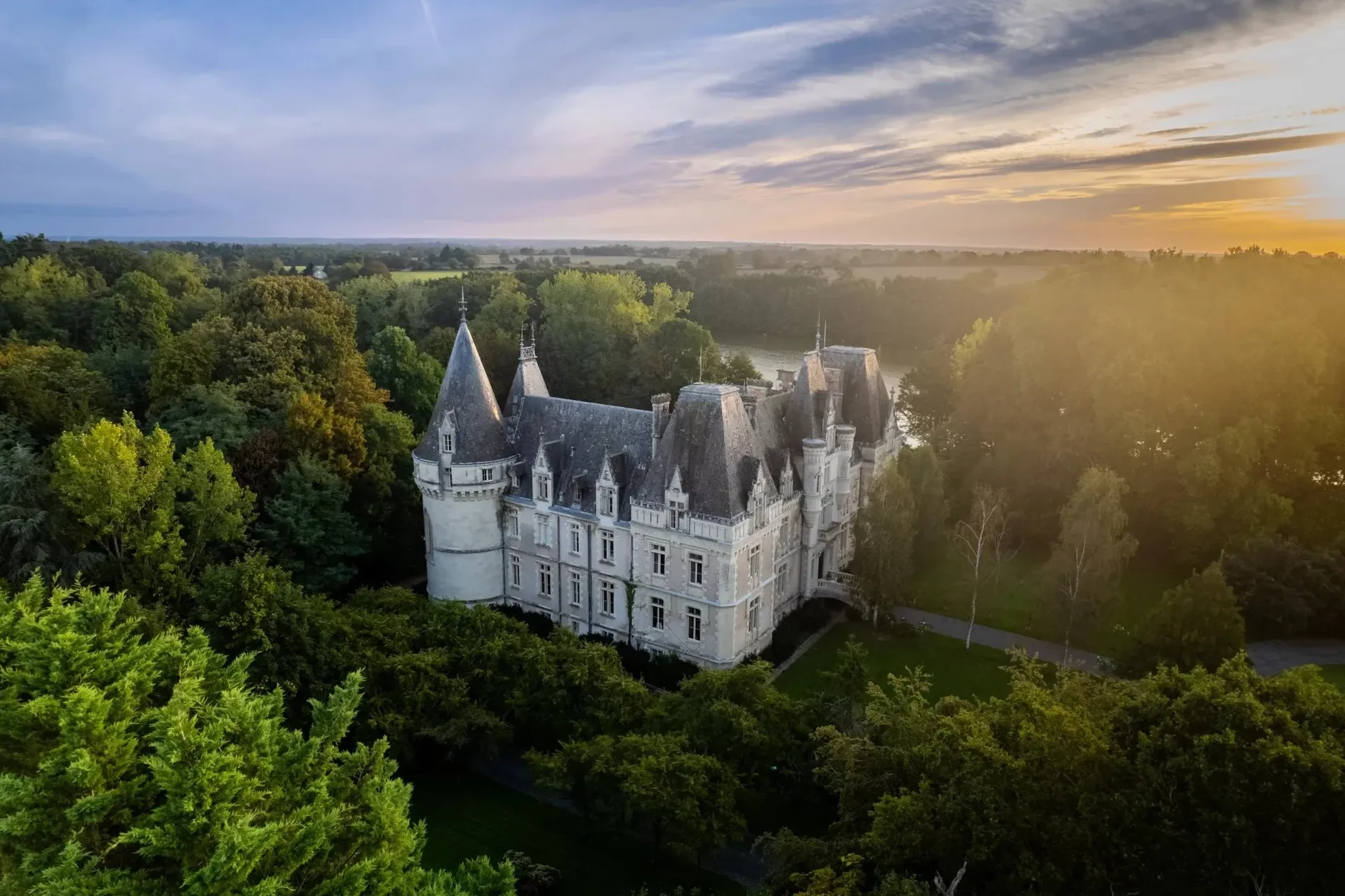
Set above the Somme River near Abbeville, the 18th-century pink-brick residence rises on a series of terraces with century-old greenhouses—each nearly 100 metres (328 feet) long—among the largest in private ownership in France.

Commissioned in 1733 by Pierre de Buissy and designed by Charles-Étienne Briseux, the Paris architect behind L’Art de bâtir les maisons de campagne (1743), the château embodies his ideas of symmetry, proportion, and light.

Stylistically, it shares the harmonious proportions of the Hôtel de Biron in Paris—now the Musée Rodin—though its pink-brick façades are typical of the classical architecture of northern France. The château has also been nicknamed Le Petit Versailles for its aristocratic history and Rococo interiors, decorated by Versailles painter Jean-Baptiste Huet.

The main residence spans approximately 1,500 m² (16,145 ft²) across three levels, centred on an oval stone hall with black-and-white cabochon flooring and antique-style pilasters. On the ground floor, a dining room features painted wood panels and two oil paintings on the theme of love by Huet (1745–1811), whose works now hang in the Louvre, the Metropolitan Museum of Art, and the Victoria and Albert Museum.

Adjoining rooms include a gilded salon with a marble fireplace and the distinctive Zodiac Salon—illuminated with natural light from three walls of windows, and decorated with twelve paintings representing the signs of the zodiac.

The upper floors contain nine bedrooms along with several salons, studies, and a library, all connected by a wrought-iron staircase painted in faux marble. Including the guest accommodations within the outbuildings, the estate offers a total of 14 bedrooms.

The outbuildings, designed with the same classical symmetry, include a former orangery converted into a “museum room,” a caretaker’s house, barn, dovecote, stable, and an independent guest house.

Set within 18 hectares (44 acres) of enclosed parkland, the estate includes formal gardens, a five-hectare (12-acre) pond, and nearly one kilometre (0.6 miles) of river frontage along the Somme. The restored 19th-century greenhouses extend along the terraces and shelter luxuriant vegetation year-round.

Classified in its entirety as a Monument Historique since 1944—with façades, roofs, and outbuildings later added in 2003—the château remains one of northern France’s most complete and well-preserved 18th-century estates.

The property lies less than two hours from Paris, 40 kilometres (25 miles) from the coast, with direct access to Abbeville and Amiens by motorway or train.

All photos courtesy of the listing agency.

Read More

€27.5M Loire Valley Castle Comes With Private Lake and 100+ Acres

Just 25 minutes from Angers, this Loire Valley estate dates back to the 14th-century, first built as a fortress during the Hundred Years’ War and reconstructed in the 19th century.

A Loire Valley estate with 14th-century origins has come to market at €27.5 million, listed with Eumeli. First built as a fortress during the Hundred Years’ War and reconstructed in the 19th century, the castle now spans 2,400 square meters (approx. 25,800 sq. ft.) with 16 bedrooms, a private chapel, and interiors of carved stone and oak paneling.

The property extends across 42 hectares (over 100 acres) and is set above a 9.5-acre private lake. A 1.75-kilometer (1.1-mile) tree-lined drive ensures privacy on arrival. Designed as a private resort, the estate includes a heated swimming pool, tennis court, and nine-hole golf course, along with trails for cycling and running through the surrounding woods. The lake offers waterskiing, wakeboarding, kayaking, and fishing. Outbuildings include a 1,600-square-meter annex, an orangery with two greenhouses, garages, and discreet parking for up to 50 cars.

During World War II, the castle was used as a base by the French Resistance, with Canadian soldiers disguising themselves as monks and signaling from the chapel’s stained-glass window to warn neighbors of enemy movement.

The Loire Valley is celebrated for its Renaissance castles, historic towns, and vineyards, often referred to as the “Garden of France.” Just 25 minutes from Angers—an important regional city with a university, cultural festivals, and acclaimed restaurants—the estate combines historic pedigree with the rare amenities of a private resort.

All photos belong to the listing agency.

Read More

This Restored Medieval Castle on 600+ Acres is 45 Minutes from Paris

Just 28 miles from Paris, this 13th-century fortress—restored over 14 years to heritage standards—now operates as a five-star hotel and events venue.

Operated as a luxury hotel and events venue with five-star services, Château de Farcheville is one of the most significant medieval castles for sale in France. On the market with Sotheby’s International Realty France for €26,250,000 (approx. $30.58M), the property offers the rare chance to live like nobility in your own fortified estate just outside Paris.

Built between 1290 and 1304 for the Bouville family—chamberlains to King Philip IV—the castle is among the few surviving rural “open-filled” medieval fortresses in the country. It underwent a 14-year restoration under the direction of a master architect of historic monuments, with work carried out by France’s leading heritage craftsmen to preserve its 13th-century architecture while integrating modern infrastructure.

The château spans more than 64,500 square feet and includes 19 double rooms, three dining rooms, four kitchens, a 600 m² orangery, a spa, and a consecrated 13th-century chapel. A 25-metre (82-foot) indoor pool is set beneath a 19th-century Beaux-Arts–style glass and wrought-iron canopy reminiscent of the Grand Palais.

Leisure facilities are as refined as the architecture: a plush velvet-clad theater for private screenings, a state-of-the-art fitness centre, a tennis court, pétanque court, and 10 hectares (25 acres) of formal gardens within 600 acres of landscaped grounds and hunting forest.

Located 45 minutes from Paris, this French château offers both private retreat and commercial potential, with permits pending for up to 40 additional suites. The listing notes potential full-year sales in the €5–6 million range, making it as viable for luxury hospitality as it is for private ownership.

All photos belong to the listing agency.

Read More

Scottish Island With Castle Ruins and a Titanic Backstory Asks £5.5M

For £5.5 million, you can buy 1,110 acres of Scottish wilderness—and a castle to restore, built by an Antarctic explorer whose architect sank with the Titanic.

Welcome to Shuna Island, co-listed for £5.5 million with Knight Frank and United Kingdom Sotheby's International Realty, the first time in 80 years its 1,110 acres have come onto the market.

Imagine owning your own island nestled in the Inner Hebrides off the west coast of Scotland, located about 20 miles south of the scenic coastal resort town of Oban and just a quick 10-minute boat ride from Craobh Haven Marina.

What’s for sale isn’t just land—it’s the chance to revive a story that spans millennia, from Stone Age ritual to Titanic tragedy, remote wilderness to potential eco-tourism.

At the island’s heart sits the weather-beaten silhouette of Shuna Castle, built in 1911 by George Alexander MacLean Buckley, a New Zealand-born soldier and explorer fresh from supporting Shackleton’s British Antarctic Expedition. Buckley, whose family made its fortune in the Australian gold rush, envisioned the castle as an ancestral seat—a dramatic Edwardian manor with 50 rooms, turreted walls, and views over Loch Linnhe.

He hired an architect to bring the vision to life. In 1912, that architect boarded the RMS Titanic, carrying plans for future commissions in the United States. He never arrived. The drawings were lost at sea.

Buckley continued the project alone, but the castle was never completed as originally intended. By the 1980s, it had been left to the elements. Today, the structure remains—a dramatic shell on the hillside, equal parts ruin and invitation for restoration.

But Shuna is more than one man's legacy. The island holds traces of nearly every epoch: Stone Age burial mounds, Iron Age votive swords, and medieval ties to Clan Campbell, to whom the island was gifted in 1321 by Robert the Bruce. Later, it passed through the hands of Clan Maclean and eventually into private ownership, reflecting the shifting allegiances and power struggles of Scotland’s clan-dominated Highlands. These layers of history are etched into the land—echoes of a time when islands like Shuna were both strategic strongholds and symbols of ancestral pride.

In the 20th century, it became the private retreat of the Gully family, who maintained it as both working farm and secluded holiday haven.

Shuna is still a working island, just not in the way most understand it. The estate is fully off-grid, powered by solar panels, wind turbines, and backup generators. Eight residential houses—ranging from lochside cottages to a 12-bedroom hillside retreat—sleep up to 52 guests and have hosted everything from family reunions to low-key wellness retreats.

There are no roads. Each home comes with a boat. Wildlife roam freely: red and fallow deer, Highland cattle, otters, seals, porpoises, golden eagles.

And while it feels like the edge of the world, it’s remarkably connected: Glasgow is 100 miles away, reachable in under three hours by car and boat—or in just 30 minutes by helicopter.

Whether revived as a private estate, reimagined as an eco-retreat, or preserved as a living archive of Scottish history, Shuna Island is a place where landscape and legend blur—a rare opportunity to own both.

All photos belong to the listing agencies.

Read More

This 1,000-Year-Old Castle Just Outside Rome Is on the Market

1,000 years of history, 30 miles from Rome—this fortress hotel is now listed with Italy Sotheby’s International Realty.

Perched high above the Sabina countryside, just 30 miles northeast of Rome, Castello Orsini has watched nearly a thousand years of history unfold—from its origins under the Orsini dynasty to its modern life as a boutique hotel with cinematic views and serious presence.

Originally built between the 10th and 11th centuries and completed in 1085, the 44,240 square feet fortress has undergone centuries of transformation. Its current configuration includes four towers, crenellated walls, and 40 guest rooms across several buildings—each one layered with stone, story, and style.

Today, the castle operates as a luxury hotel and event venue, complete with banquet halls, a restaurant, bar, wine cellar, and sweeping outdoor spaces including a pool terrace facing the valley. Interiors blend Romanesque bones with historic frescoes, antique furnishings, and quiet nods to the past—no gimmicks, just gravitas.

The estate includes the main castle, five-suite Scuderie, and a four-building borgo, plus a gym and rustic annex. From intimate suites to panoramic towers, every inch of the property leans into its medieval roots without getting stuck in them.

This is the kind of listing that rarely comes to market—and when it does, it’s not just for anyone. It’s for the collector, the curator, or the next quiet custodian of Italian heritage. In other words, a castle for those who understand what it means to own one.

All photos belong to the listing agency.

Read More

1870 French Château in Normandy, Just 10 Miles from the Sea

Located in the heart of Normandy’s Bessin region, between the historic towns of Bayeux and Caen, this neo-Gothic château, built around 1870, features a detailed façade with esoteric design elements that evoke the quest for the philosopher’s stone.

Located in the heart of Normandy’s Bessin region, this 19th-century neo-Gothic château stands between the historic towns of Bayeux and Caen, just 10 miles from the sea. Built in 1870, the château’s intricate façade is adorned with esoteric design elements, symbolically referencing the search for the philosopher’s stone.

Spanning 466 m² (4,951 sq ft), the château features monumental stone staircases, stained-glass windows, rich wood paneling, and elegant parquet floors. Recent updates ensure modern comforts, with new roofing, windows, and heating, blending old-world charm with contemporary living.

The château offers a spacious layout with six bedrooms, multiple bathrooms, and a garden-level space once used as a restaurant. Set on 7,000 m² (1.7 acres) of parkland, it includes outbuildings, including a historic orangery with an adjoining chapel, a large garage, and a pavilion with potential for further development.

Just minutes from Bayeux and Caen, and only a short drive from the coast, this property offers a unique balance of serenity and access to Normandy’s historic treasures.

All photos belong to the listing agency.

Read More